


YOGYAKARTA (often spelled as Jogja, Jogjakarta, or Yogya) is the premier tour destination of Java island, Indonesia. A thousand years ago, Yogyakarta was the center of the Ancient Mataram Kingdom which was prosperous and had high civilization. The kingdom built Borobudur Temple which was the biggest Buddhist temple in the world, 300 years before Angkor Wat in Cambodia. The other archaeological heritages are Prambanan Temple, Ratu Boko Palace, and tens of temples spread out in Yogyakarta
Yogyakarta at the present time is a place where traditions and modern dynamics can walk side by side. In Yogyakarta, there is a Kraton (palace) with hundreds of royal servants who hold the traditions faithfully, but there is also Gadjah Mada University which is one of the reputable universities in Southeast Asia. Most of the citizens of Yogyakarta live in a strong agricultural tradition, but there are also many college students that live in a modern lifestyle. There is a traditional market in Yogyakarta which stand side by side with modern mall.
Kraton The Sultan’s Palace is a grand complex that was meticulously planned to reflect the Javanese cosmos.
This elegant complex of pavilions was constructed based on ancient beliefs, of the connection between the God, human and the natural realms. Each feature holds a special symbolic meaning related to the Javanese worldview, who consider the importance of Mount Merapi and The Indian Ocean.
The Kraton was built in the center, facing directly north towards the majestic Mount Merapi. Its south side was built facing the Indian Ocean, believed to be the abode of Kanjeng Ratu Loro Kidul, the Queen of the South Seas and the mystical consort of the Sultan.
This splendid example of traditional Javanese architecture has no equal. The basic and original layout of the main building of The Kraton began its construction during the reign of Sultan Hamengku Buwono I, in 1755 – 1756.
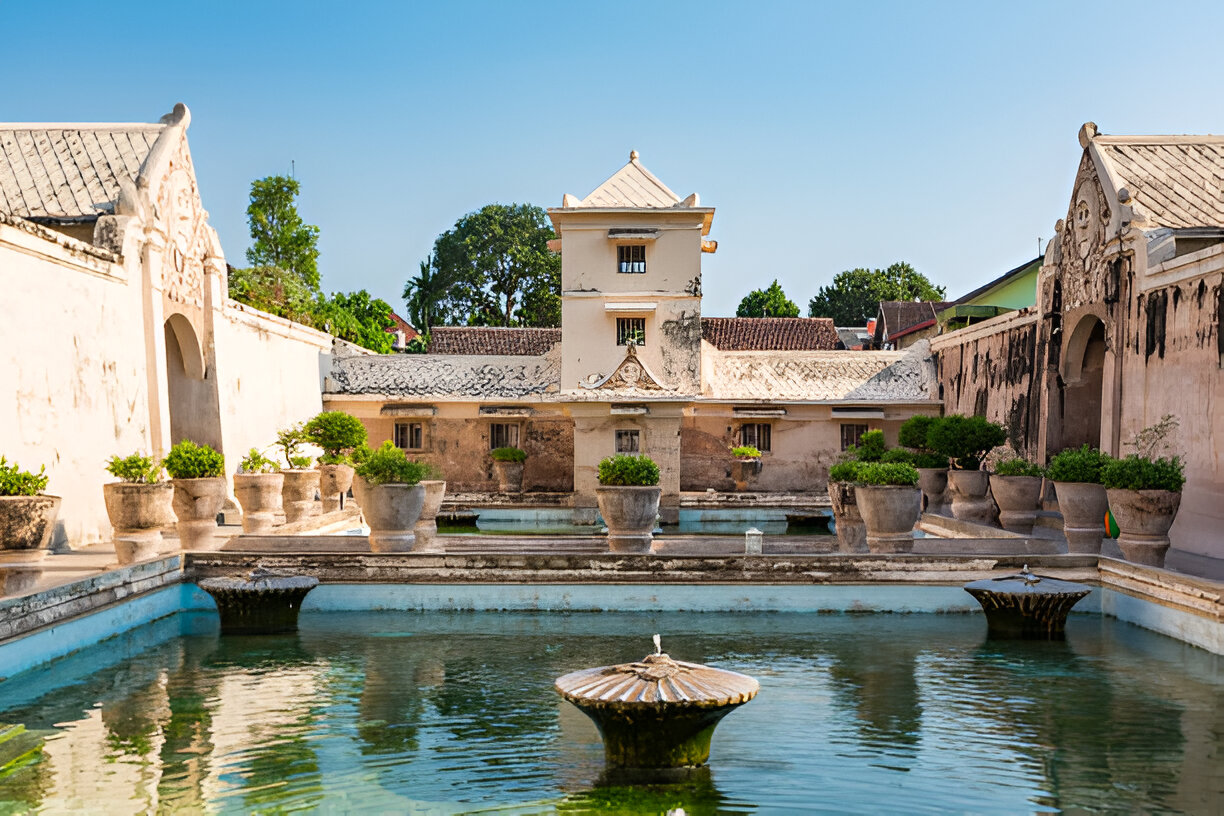
Taman Sari Water Castle, this place was also known as the garden for the Sultan of Yogyakarta. Tamansari was originally built for multiple purposes yet now only several buildings remain. Some of its original functions were a place to rest, to meditate, to work, to hide and to defend the Sultan’s family. In this present day, some of its buildings have now become homes for local residents and only the mosque, resting and bathing space, and underground tunnels are accessible by tourists.
How To Reach Jogjakarta :
International Flight :
From Singapore : Scoot , Air Asia
From Kuala Lumpur : Air Asia, Malaysia Airline
Domestic Flight :
From Medan, Jakarta, Denpasar, Surabaya, Lombok, Balikpapan, Banjarmasin