


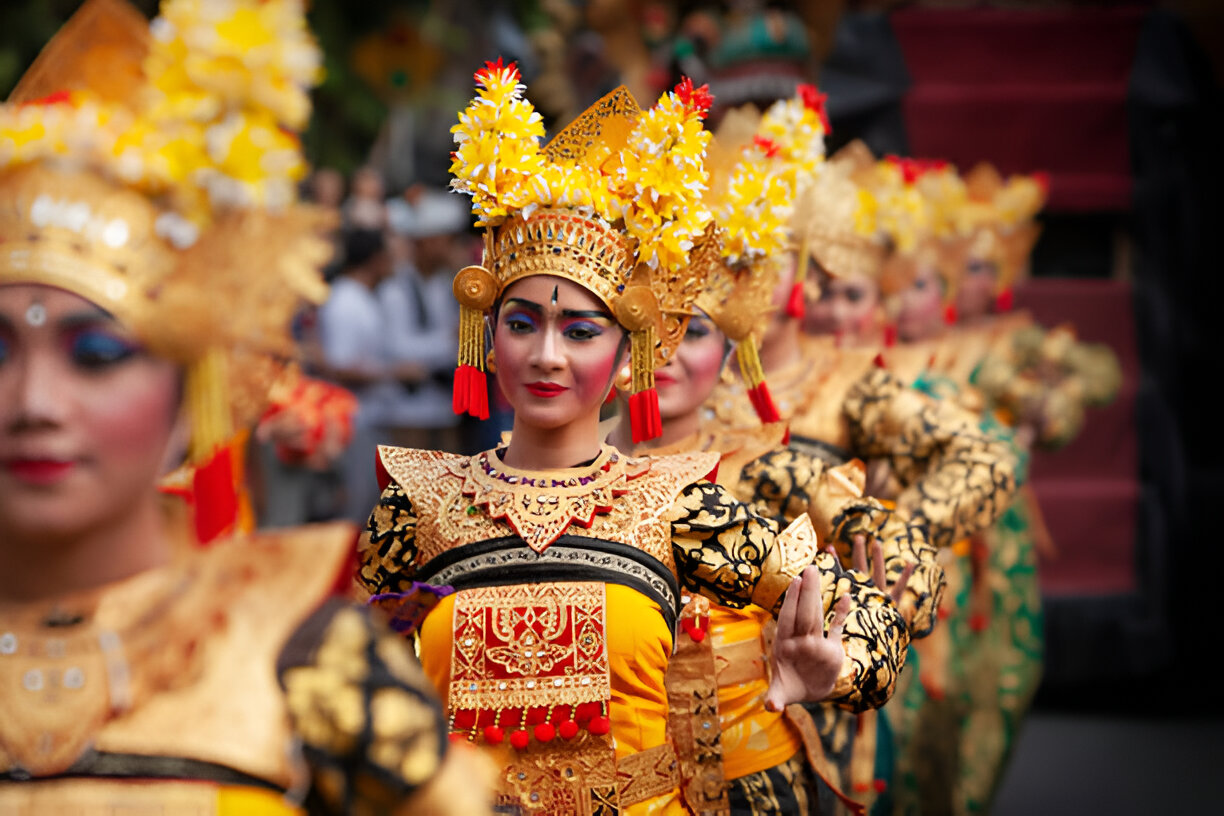
Bali Island, the perfect holiday destination for all ages offers something for everyone. Bali offers not just various customs but also various “adrenalin pump” parks. Many exciting amusements are available in Bali, with something new opening all the time
Bali is small island, just 140 Km by 80 Km and lies between Java, the most highly populated and influential of all the islands, and Lombok, one of the quieter and moderately slower paced islands. Like many islands, Bali has developed a world of its own. It not only captures what is special about Indonesia but also has a uniqueness of its own.
The culture of Bali is unique. People say that the Balinese people have reached self-content. The Balinese people are proud of having preserved their unique Hindu culture against the advance of Islam, the dominant religion throughout Indonesia. This is still reflected in days to day life and can be seen in the numerous ceremonies, Balinese festivals and magnificent temples and palaces. The Balinese are skilled artisans, particularly in woodcarving and in fashioning objects of tortoiseshell and of gold, silver and other metals. The Balinese are noted for their traditional dance, the distinctive music of the gamelan and for their skills in weaving cloth of gold and silver threads. Stone and woodcarvings, traditional and modern paintings and intricately designed jewelry in gold and silver are readily available in shops and galleries throughout the island.
UBUD
Ubud is located in the central part of Bali Island. The name Ubud comes from the Balinese word Ubad that means medicine, inspired by the abundance of medicinal plants and herbs in this region. If you’re looking for peace and quiet, then Ubud is the place to be.
KINTAMANI
Getting to the volcanic Mount Batur, one of the primary points of interest in Kintamani, takes about 3 hours from the more touristic central areas of Bali. Therefore, it’s best to plan your trip with other places to visit along the way.
ULUNDANU TEMPLE
is the second most important temple in Bali in Indonesia, after Pura Besakih. Built in 1926, the temple is dedicated to Dewi Danu, goddess of lakes and rivers. “Ulun Danu” literally translates as “head of the lake”.
Originally, Pura Batur and the village of Batur were located down in the caldera at the foot of Mount Batur, an active volcano. A violent eruption in 1926 destroyed both the village and the temple, except for the most important shrine, an 11-tiered meru dedicated to Dewi Danu. The villagers moved to the highest and oldest rim of the caldera, where they rebuilt their village and the temple.